Here is a new favorite band: The Nerves.
The version you remember:
The original:
The version you remember:
Jack Lee of the Nerves wrote it. The Nerves have a great punk version. You can get it on the iTunes set list, but I could not find it on youtube. Here is a Jack Lee solo version:
Apparently Jack Lee, the guitarist of the Nerves, also wrote Blondie's "Will anything happen," another favorite track of mine:
The Nerves. Jack Lee. Rad.
Why does it seem to take me so long to make these discoveries?
Tuesday, December 6, 2011

Tuesday, December 21, 2010
two new tracks

Here are two more tracks I'd been holding on to for far too long. Mixed, bounced, shared.
The first one is about, well, I'm sure you can imagine. Any dysfunctional systems in your life?
Figured Out by Tetramorph
The second one was just pure fun. It took me a long time to let go of it, because I was afraid it was too "silly" and not "serious" enough. Enough of that.
Rock 'n' Roll Festival (of Love) by Tetramorph
Hope you enjoy them! Please let me know what you think. Thanks for the support. Peace.
Monday, December 20, 2010
Incompatible new track

I finally finished and uploaded a new track to Soundcloud. I am really happy with it. It is pure pop, but that is what I am enjoying creating these days. Two things about it:
One: I named it "Incompatible," because it came from doodling around with "incompatible audio units" in Logic and a scare window kept popping up, reminding me of the fact. As it grew, I realized it was about an important new relationship in my life, so I ran with it.
Two: I am singing almost entirely in falsetto. In a dialogue with Stretta about a year ago, he gently commented on the quality of my singing voice by commenting on his own ability to control his voice better when in falsetto. Hint hint. Got it. And it is true. To sing pop, you just can't fudge, you've got to hit the note dead on. And I still don't; but at least in falsetto I can fake it a little bit better. I also like, in a Brian Eno kind of way, the way in which the falsetto allows me to distance myself from my work, take on a persona, so to speak. And, heck, I just like the sound of falsetto in pop. Okay, so there is my apologia pro falsetto mia.
Incompatible by Tetramorph
Please let me know what you think. Thanks for following, and thanks for the encouragement. Peace
Tuesday, August 10, 2010
solovox, my love

My great aunt has loved and played music all her life. Her instruments are keyboards: pianos, organs, accordions, and the Solovox. Growing up, I remember many a rendition of the Tenessee Waltz in the music room of her great big old house. Great uncle on the violin, Aunt on the piano. Every now and then the cool electronic whistle of the Solovox would come humming out of that piano cabinet. When I first saw and heard my Aunt's Solovox it was already 30 plus years old and sounded great. Well, they just don't make 'em like they used to.
In the 90's my Aunt bought one of those new-fangled midi-pianos. No need for the Solovox. But she is a smart one, and she kept it.
I visited my Aunt last month. I went looking for something in one of her closets. There was her Solovox! In storage! Sometimes considered the "first synthesizer" (there are many artifacts that could qualify), pure tube power! I had to take it out. My Aunt knows my love for music (although she has no love for the kind of music I like). She insisted that I take it home. Well, here it is:

Above is the underside of the keyboard unit. The keyboard is designed to be mounted underneath the keyboard of a grand piano. That long metal rod is the on-off and volume lever. It is designed to be operated by one's knee for dynamic control. RAD.

The next picture is of the sound cabinet. This would be mounted within the piano's sounding board. Can you imagine someone being willing to do this to a piano?
The final picture is of the other side of the sound cabinet. Here you see the tubes in action. The thing still works (basically). And the tubes emit their yellow glow that says: you are now playing with electricity.


Now, where to keep it I have no clue, but I am so happy to have this thing! It is both an amazing and historical piece of electronic musical equipment and a reminder of my cool great Aunt!
But what does it sound like? I am glad you asked. Here I am noodling around (top note priority):
After recording it with a friend, we started dropping different channel strip settings from logic on it. So I decided to turn it into a little electronica / techno / house track (still can't tell the differences between all those unbelievably specific sub-genres - does every artist / band just have its own sub-genre now? Doesn't that defeat the point? I digress).
Vox Soli by Tetramorph
Thanks for listening. More tracks to come. I keep brooding over them. They will hatch soon.
Thanks for following. Peace.
Friday, July 23, 2010
down to the wire

So, apparently, Wire is the most under-recognized serious influence on punk, post-punk and new wave that I currently have finally found out about.
I am exploring their work and enjoying it. What I love about Wire is what I love about so much post-punk and early new wave: no fear of recording a short pop-song with both wild guitars and heavy and obvious synthesizer use.
I love Eno (like any synthesist should) -- but I love his early solo rock stuff as much as his ambient. I love a good synth-based song every now and then: but who ever said that being a synthesist meant that you had to be obsessed with music primarily driven by the synthesizer. I am not aware of there being any bass-rock out there. Or ambient bass music. (I know it is not a very good analogy, but just give this one to me, okay?)
I saw a documentary recently where the Edge talked about being the kind of guitarist who understood his role as being accompaniment to a pop-singer. I remember reading an interview of Nick Rhodes once where he talked about not being interested in novelty sounds, synth-solos, and bringing the synth to the fore of the music. He saw himself as created background atmospheres with strings, etc., and rhythmic interest through sequences and arpeggios. So the order is: singer, then guitar, then synth. I must admit that I am an odd kind of (amateur) synthesist: I basically like pop and rock music that is unafraid of bold and obvious synthesis but that still privileges rock's first two main instruments up front: the voice and the guitar.
Having finally figured this out about myself and becoming able to name it has allowed me to realize that it is hard to do the kind of synthesis and synthesizer accompaniment I really enjoy most listening to and contributing to because a.) modern DAWs hand you the capacity to make synth-rock on a platinum platter and b.) I do not actually have a band around me and I am what I would call BARELY proficient on the guitar. That being said, when I recently added an electric guitar to my project studio I was happy to discover how much easier it was to record a line-in distorted and/or heavily effected electric guitar and sound okay than trying to microphone record a nice take of acoustic guitar.
Oh, well. My bare proficiency at the guitar is a limitation that gives structure to my creativity. Besides, isn't barely proficient guitar what (post) punk music was and is all about anyway?
With that said, I have about three unfinished tracks that I am still working on but too self-conscious to share. I should have at least one of these up on Soundcloud and discussed here before summer is out.
Thanks for following. Peace.
Wednesday, June 2, 2010
the end of the book
I've been reading a lot of stuff about how "print media" is at an end. I understand the points that folks are making about this from a technological and practical point of view - and I experience this transition to the electronic, myself, to a certain degree. But to this bibliophile who also reads his local paper every morning with his family at breakfast, I must say, it is a kind of sad prospect to me. It is a little odd to be a web logger who prefers to read (and edit) things on paper. Computers are still a tool to me, rather than a means of reading.
If a book is just a means of dispensing, storing and looking up information, then goodbye to it. If a book is work of art in itself, then, as with all forms of art, I think it would be truly sad to see it go. So my title is a play on words. Perhaps print media is over. But it may not mean the end of the book (as in its discontinuation) if we take time to take a look at the end of the book (what a book's telos is).
The Book of Kells is what "book" is meant to be.
The Book of Kells is not "print media." If print media must go the way of the Dodo, then I suppose I will survive it. But an illuminated manuscript is a work of art - and not printed.
In the west, ancient Christian art developed into stained glass windows on the one hand, and illuminated manuscripts, like the Book of Kells, on the other. Books are a Christian art-form. The book was invented as a means to preserve, teach, process (liturgically) and proclaim the Christian scriptures. Every literate culture has some means of preserving its writing. The codex predated Christianity in the ancient Mediterranean world. And codices are book-like in form. But the thing we call a book, when the word "book" is used to refer to a kind of material artifact that is paper or vellum bound between covers, is Christian. Its end is tied up in liturgical goals. A book is supposed to be beautiful in the same way that a church is supposed to be beautiful, and the robes of the altar party are supposed to be beautiful. Books are a liturgical art form: their end and goal is the glorification of the ultimate reality that Christians seek. The book as a means of glorifying utlimate reality thereby makes a statement as to the nature of that reality. So we shouldn't be surprised that books came out of a religious culture that claimed that God was "logos," word, narrative, story, reason, argument, logic, itself.
I am reminded of another project going on right now, the St. John's Bible:
I like and dislike the St. John's Bible. I dig the idea of not simply imitating ancient illuminated manuscripts but rather trying to bring illumination forward into the 21st century. But in this particular case it is often only the idea that I like. The actual execution of it (and you can here it in the word-choice of the illuminator himself in the video embedded, above) comes across as too romantic and self-involving on the part of the illuminator. Does "21st Century" mean inserting the modern, impermeable, individuated and consumerist "self" into the illumination? I don't mean to sound too critical, the St. John's Bible is lovely. And the illuminator amazing. But one of the key parts of ancient illumination in the west, as with iconography in the east, was the spiritual principle of humility as anonymity. As an art form, iconography and illumination are about the expression of something transcendent to the cosmos itself - they are not about the expression of the "self," or the individual artist (except, of course, paradoxically as a microcosm of the cosmos itself). Oh wells.
This whole post was inspired by a viewing of The Secret of Kells, which is a truly remarkable movie:
It is, for a movie, an example of the kind of art that I always hope that any form of art can aspire to: I wish there were more books like the Book of Kells, and more animated movies like the Secret of Kells. It is scintillating. The scenes where the main character is walking alone in the woods are amazing: the light shining through the moving trees above is rendered as patterns appearing within the form of the character himself who is rendered as kind-of semi-transparent. Amazing. The whole thing is so visually overwhelming that by half way through I just gave up trying to notice it all and I just let it wash over me. On top of all that, the movie celebrates the book as a religious art-form. At one point, the main character battles a supernatural enemy through his skills as an illuminator. I could go on and on but I won't. Needless to say, I will have to give this film multiple viewings.
Finally, I think that the print industry will survive, but I imagine that to do so it may have to go "specialty," that is to say, printing stuff that takes advantage of the art-form of the book and that which is art-like in print itself. To sell books, they will have to be more than information storage and retrival. They will have to be beautiful. They will have to be things that you wouldn't want on a computer screen. When I think about that, I think of Taschen, check them out. They produce books with rich images, like that below, that you wish you could see on a beautiful clay paper page, rather than on my web log:

Thanks for following. Peace
Sunday, March 28, 2010
missing tintinn
Check out this great use of the monome app tintinnabulome:
tintinnabulome "STEPS" from Gattobus on Vimeo.
Tintinn (for short) grew from the work of Stretta, Occular and others in the monome community from an idea I threw out there. I love the app and I've done a couple of tracks with it myself (specifically, an initial meditation, "Winter Sun Setting," and an attempt at a collaboration with NK-E).
I am looking forward to getting back, after the busiest semester of my life finally ends (yes, busier than my dissertation defense semester - or at least the same).
Peace
tintinnabulome "STEPS" from Gattobus on Vimeo.
Tintinn (for short) grew from the work of Stretta, Occular and others in the monome community from an idea I threw out there. I love the app and I've done a couple of tracks with it myself (specifically, an initial meditation, "Winter Sun Setting," and an attempt at a collaboration with NK-E).
I am looking forward to getting back, after the busiest semester of my life finally ends (yes, busier than my dissertation defense semester - or at least the same).
Peace
Sunday, February 28, 2010
guitar edition

The latest addition to my project studio is my new Fender Squier Bullet, antique white.
In the midst of a tenure review, a chronic sinus infection, teaching, advising, meetings, ecclesiastical orderings, being a father to two toddlers: I have been able to rock out, and that has, in part, kept me going.
I had enough money to get a simple electric guitar and I am so happy. I have been sampling every channel strip setting in Logic endlessly. It is nice when it sounds like you have a wailing stack right next to you but it is just your computer and some headphones.
I've even been working on some tracks that now actually sound like rock music. Dance punk is on the way.
I'm still here, I've still eked out some time for creativity. Nothing could be busy than this semester. I'll be hanging out with folks at the SXSW monome meet up this Spring Break. And I will be sharing sounds and tracks.
Thanks for following, and thanks for the support.
Friday, January 1, 2010
Seraphic hymn

I worked on the following track on new year's afternoon:
This is an attempt to render a musical setting for the Eucharistic Prayer (the "canon of the mass" if Roman, the "anaphora," if Eastern), in this case, prayer "B" of the current American Prayer Book.
(For those not familiar with the Eucharistic Prayer: it is the oldest and most unique Christian prayer. It is the prayer at the Christian liturgy whereby the congregation, through the voice of the presider, offers themselves sacrificially in the sacramental elements of bread and wine, and whereby Christians believe that the sacramental elements are made the body and blood of Christ.)
It is my first attempt at full-fledged sacred music. Here is what I was trying to achieve:
- Something simple enough (even "minimalist," even "sacred minimalist") that a real congregation could memorize it and do it from "folk-memory," without need for written music or even words if they come to the Divine Service frequently enough
- Something that allowed the clear word of the prayer to be heard and shared in by all while also, in a quasi-Eastern style, having over-lapping voices simultaneously singing, a kind of music of the spheres where the harmony is so simple that the words are not obscured but enhanced
- Even though going quasi-Eastern, I wanted it to sound like Western chant and not simply be an Eastern-envy kind of thing
That said, the track is just a sketch. All the voices are mine, multitracked. I recorded it on my lap top with its own internal microphone, so, nothing fancy. I sing both sides of the opening dialogue (I had no one with me to be the "congregation"). The "ah" that I sing is really supposed to indicate a "drone-tone" hummed, closed-mouthed, by the entire congregation. The entire "congregation" then joins together in singing the Sanctus et Benedictus.
After the Sanctus et Benedictus, the other voice that enters would be the deacon (or, if the deacon can't chant, a cantor), in a single voice, continuing to chant the main tenor melody line of "holy, holy, holy," over and over again until the memorial acclamation. All join in singing the memorial acclamation (in the case of prayer B "We remember his death, we proclaim his resurrection; and we await his coming in glory"). After the memorial acclamation, the deacon then chants, to the same melody, "maranatha," aramaic for "come, Lord."
At the doxology, the deacon then simply joins the congregation in the drone-tone. Then the entire congregation sings the Great Amen in a three-fold form.
It is all my own voice, of course, so my voice cracks. I make noises as I move around. I don't have an Altar-Book with me, so I don't have the written music version of the chant. So the priestly chant is actually done from my own "folk-memory," and, for those of you familiar with it, you will notice where I goof up. I also chant the part of the prayer after the preface and up to the doxology to a simple collect tone.
I decided not to try to make it perfect, but to leave these mistakes in, in order to allow it to show how a real, living congregation might actually enact such a prayer, rather than trying to make it sound like some perfect, studio choir with no blood in its veins.
A brief aside: a question for Logic users: as I continued to add more vocal tracks, I started getting some real latency issues: even when other tracks were off, not monitored, and when there were no audio regions on those tracks. (You will notice that this causes me to chant more slowly towards the end: I keep hearing myself delayed in the headphones, and this slows down my chanting -- which should be fast and vivacious.) By the time I got to the Great Amen, I was also getting lots of glitchy artifacts. But when I bounced it, they seemed to disappear, more or less. What was going on? What could I have done to have prevented that? I would like to be able to do more of these kinds of liturgical sketches in the future.
Finally: what do you all think? Have I achieved my goals? Is it too ______? I invite constructive criticism and comments. My hope, as always, is that this can be a real meditation, and something working towards a truly minimalist and contemplative liturgical act.
Thanks for the encouragement. Peace
Saturday, December 19, 2009
the epic and the pop song

There is a statue of King Geser in Ulan-Ude, Buryatia. It is really quite impressive in person, I might add.
King Geser was a legendary, well, that is to say, epic, in the literal sense, King of medieval Tibet. His epic has spread wherever Tibetan style tantric Buddhism has spread - including what is now the Buryat Republic of the Russian Federation.
Check out the Wikipedia entry on Geser. There are something like 140 living Geser epic singers. They know the entire epic by heart, with only the expected regional variations. It is an oral tradition. Some of the singers are "illiterate." It is one of the only living epic traditions in the world today - the way the Iliad and the Odyssey would once have been living oral traditions in ancient Greece.
Then there is pop music. We have no living epic in our modern western culture like King Geser. I used to think about this in a negative way. Something like: pop songs are a dime a dozen. Pop songs are trite, meaningless. How many pop songs does the world need? When I would set down to write one, I would ask myself: does the world really need my poor amateur pop song added to it?
I now think this kind of thinking is all wrong. The famous structural anthropologist Claude Levi-Strauss said that modern western art music ("classical" music) has filled in the vacuum left by the evacuation of myth under the conditions of modernity. I think there is a depth to this insight that I fundamentally agree with and that is too huge for a blog post. But I think that there is an analog here: the endless generation of pop songs on the same template but with a near limitless number of finite instances fills for us in the modern west the pre-modern art of epic singing in the same way that art music fills for us under modernity our lack of pre-modern myth.
How do those epic singers remember all of it? They have a form, a template. They have an over-arching narrative. They have tones and sound structures within their folk-music theory. And from this they generate the epic over and over again. The almost infinite form gives birth, over and over again, to new finite instances.
And isn't this what we do when we make a pop song? Four instruments: rhythm, bass, treble, and melody. A few basic chords. One basic structure: intro-v-ch-v-ch-bridge-break-v-ch-coda. And we have a narrative: a story to tell. Even if we are trying to obscure it by being "alternative."
So, when I ask myself: does the world need one more pop song? Does the world need me to fill it with my silly attempt to craft another ditty? The answer is now more subtle. No, the world does not necessarily need my pop song. But I need to do it, because this is how I share in the epic.
Thanks for following. Peace
Tuesday, November 24, 2009
Days and Nights: New Track

In my last post I indicated that I was away in Siberia. Well, we've been back about a month now, and in that time I have been able to cobble together my first shareable pop song.
It is inspired by the 10 extra days in Siberia we were not expecting to have to stay that we did. We waited for our new daughter - and were away from our little son at home. The song reflects the heartbreak and resolution that we had that got us through.
Lead female vox is my dear wife. Horrible male lead vox at bridge is yours truly. It does not sound cheesy to me, because my heart was poured out into this. However, I don't need to share this stuff with the world if it is not worth sharing. Please gently let me know if I should just stick with electronica and ambient, or if I should just try harder next time. If you like it, but have some advice, please share that too!
This month marks a year since I received my monome 64 and since I began sharing my creative avocation via this web log. I have so much to be thankful for. More posts to come!
Thanks for following, and thanks for the encouragement. Peace.
Saturday, October 3, 2009
siberian outpost

I am away from my project studio. I am away from my laptop. No synthesizers. No midi. I had to travel light. We are gaining a new member of our family in the midst of Siberia. So my familial duties have drawn me away from my avocation for a time.
I know that, however, upon my return, I will enjoy making sounds and laying down a few tracks to share. These kinds of adventures are always inspiring.
Above please enjoy a photo of the most popular Soviet Analog Synthesizer of the 1980s: the Formanta Polivoks. Peace.
Friday, September 11, 2009
analog poly

As the school year begins I find myself caught up in the swirl of activities that force my vocation front and center. My avocation takes the periphery. Yes, that is right, my beautiful and seemingly endless sabbatical is over. But, God willing, my avocation is not to disappear along with it.
I have been snatching time for music and alternating between two joyful tasks in learning mode: Firstly, I have been studying this great book about chord progressions and building pop songs from chords called The Song Writing Sourcebook (Rikky Rooksby). Most of my study of theory has been from "official" art music sources, or on the fly from folks that understood the pop stuff. When it came to pop, it was usually just about memorizing standard progressions. What is great about this book is that it analyzes the why behind pop chord progressions. And it helped me with my art theory as well. Why didn't they tell me that the harmonic minor scale isn't really a scale at all but is really about collecting the right notes together to allow the dominant (V) chord to be major in what would otherwise be a minor key? Now I get it.
But the other half of my avocational time has been spent navigating alien territories in the form of my new Alesis Andromeda A6. Sorry, the name is so cool, I just have to write it all out, at least the first time. Progress plot: unlike the analog poly's of the 1980s, the Andromeda combines lots of knobs and switches (in the form of encoders, rather than actual potentiometers, sadly) with the same kind of digital interface that many synths of the late 80's and 1990's. That digital interface forces you to "menu-dive." There is no way of knowing from the position of things on the surface what may actually be lurking deep in the depths underneath. So although it is a genuine analog poly, it does not have the genuine interface of an analog poly.
Let me be clear. I am not complaining. A month or so ago I was complaining ("why, oh why hadn't I bought the Poly Evolver! "). I kept imaging the kind of poly synth I was really looking for. I realized it was basically my Prophet 600 with a bit more modulation routing, an extra LFO, an extra envelope and maybe some overdrive in the VCA. But as my mind wandered I realized something: I have that synth, it is my new beautiful A6 that I keep ignoring. So, I realized, rather than whining, I ought to shut up and actually get to work. Time for some serious menu diving.
So I signed up for the A6 forum. I asked the folks there how the heck I could tell the difference between the pre-wired modulation routings and all the multitude of software derived modes via menu-diving. They kindly and politely told me one thing: stop whining and build your own blank patch. The process of zeroing everything out (and they did mean everything) would, itself, teach me all the modulation routings while at the same time provide me with my own tailored start-up patch for building my own.
Well, of course, they were absolutely right, and I am so glad for the kindly forum advice I received. I've become familiar with this strict machine, and am beginning to take some joy in programming it. There are things that are still a mystery to me, of course. But I have much more of a handle on the device. It turns out I am not an idiot. It turns out I actually do have some basic talent and knack at analog synthesis. I am looking forward to future posts where I can show off some of my own A6 patches. Right now I am just having fun making my FM-ed oscillators scream in all their metallic glory. Which leads me to the final reflections of this post and check-in.
With my complaining days behind me, I have begun more rationally to reflect upon what it was that led me to that initial and unnecessary despair at programming my A6 in the first place. And I hinted at it above. It is genuinely analog, that is to say, at least in terms of its VCOs, VCFs and VCAs, which is good enough for me. But its user interface is not genuine analog poly. That is why I included a picture of the patch-chart for a p600 patch, above. Look at its beautiful simplicity. What you see is what you get. No secrets under the hood. If a knob is turned one way you know that it is really turning and churning the electricity (although, sadly, it is true that there is pixilation with regards to the p600 because of the way in which the pots had to be digitally mapped in order for its patch memory to work).
So, two reflections. First, part of the beauty of the analog poly was just exactly the way in which in limited your choices. It was the pre-patched and pre-made-choices, at least in part, that gave each analog poly its distinctive voice, tone, feel. You are forced to work with what you have got. And the limited canvas forces creativity. Standing before my A6, I realize that sometimes I am stunned by the possibilities. The way I get around that now is by building, in my mind, the analog poly I want to pretend that I am working with. I set those "hard-wired" parameters in the menus then I work within my artificially derived limitations. So, again, don't get me wrong. I love my A6. I am delighted that I get to build my own imagined limitations. All I am saying is that the user interface itself forces me to loose the humble familiarity that I feel when I start playing around with my p600.
Frankly, I just don't know how the modular-kings do it. Jealous? Yes, of course. But, paradoxically, content. Besides, comparing the analog poly to a modular just isn't fair. Did the analog poly evolve, technologically, from the modulars before it? Yes, of course. But I am beginning to see them as really different electronic musical tools. Some synth histories tell the story as though the development of the analog poly was like a great fall from glory and grace, or like the decline of the Roman Empire. But the story doesn't have to be told that way. When I think of the lush tones that come out of a Crumar Performer, it just can't be compared with, say, a screaming lead out of a Moog. It's apples and oranges. And I like both. But I lean towards oranges. And what if the move from modular to poly is like the decline of Rome; and what if that decline is a good thing. You know, like it is actually sometimes nice to throw off the oppression of imperialism.
The analog poly inspired its own kind of music, especially in the realm of pop. It is what defined the early 1980s. No analog poly, no Prince, no Duran Duran, no Peter Gabriel. They could not have made those arrangements, even with a string of modulars acting polyphonically. The poly is its own kind of synth.
But where my mind is wandering next is towards what exactly it is about analog that drove me to give up my powerful Korg Wavestation? Why is analog "better" than digital in this regard? I don't mean in some audiophilic kind of way. I mean metaphysically. I think it is about the difference between analogy and univocity, between participation and representation. But, alas, it is late, I am tired, and such ruminations really deserve their own post. So that's all I've got for now. Thanks for following, and thanks for the support. Peace
Tuesday, August 4, 2009
behold, concertinome
You've just got to see and hear this to believe it.
Okay, so I am not usually into "monome + X = fun" as a formula, because it seems to me to violate the basic thrust of the monome aesthetic: minimal design. Just do a search for the various guitar-monome hybrids out there. But I make an exception here because, well, I don't know, I just found it really beautiful and moving. I like this bizaar interaction of folk instrument with postmodern controller. Enjoy, and comment. Peace
Monday, July 27, 2009
collaborative meditation
I month or so ago I was contacted by NK-E via Soundcloud with the idea of doing a collaborate track together. He provided an ambient found-sound style "seed" track and I provided this meditation in tintinnabulation back to him:
He agreed that I could go ahead and share it, even though we are not yet done with our collaboration. I am looking forward to what it will become. Working with NK-E has been great fun. Please do check out his blog, SUBNOTO::INDICO and his other spaces.
Thanks for following, and thanks for the support. Peace
Monday, June 29, 2009
of alchemy and analog synthesists
Ahh, for those good old days when synths were big, bulky and mysterious.
I was born in 1974, but I musically identify most with the stuff that was going on right around that time, say, 1972 through about 1984. The rise of the analog (as opposed to the purely modular) synth through the rise and fall of the analog poly. When digital comes in, I just loose interest. Eno can have his DX7 - he is the only one I can think of who pulls anything interesting out of it. Sure, at the time the digitals came out, I was just getting into synthesis and, as with any industry driven by technology, I was swept up into the turn to digital and that is what compelled me to buy my Wavestation in 1993 with a small inheritance I received. I don't regret it. But I also don't miss it. I am happily learning my Andromeda instead. I am grateful for the return to analogue in this first decade of the twenty first century. It feels a bit like coming home.
As a little kid in the age of new wave I remember listening to music and already being able to single out that strange instrument with a keyboard on it that I knew wasn't a piano - or even like my old great aunt's organ. Finally, I heard the word - synthesizer - and that it was about electricity - and it was instant love.
I remember the way that Gary Numan's "Cars" or Tom Petty's "You Got Lucky" would make me feel. I won't say other-worldly. It definitely had to do with our own world - in fact, very deeply and primally so. I won't say "technological" either. It was more like alchemy, like mad science. I guess that is why Thomas Dolby (steam punk for sure) is a hero to me, while Vince Clarke (who is certainly a great synthesist and programer - no argument here, but he) just doesn't do anything for me.
I've said here before that I don't like synth pop. Yet - and here I am letting the cat out of the bag - I love Duran Duran; and Nick Rhodes is, well, a big synth-hero to me. (Excuse: I was a kid and I did not understand or even know about the weird teenage girl cult-following. That stuff still makes me feel queasy.) What is going on here? I have been grappling with this seeming inconsistency. I think the thing to me is: does the use of the synthesizer make you feel like a robot, a guy with a fetish for the synthetic - or does it make you feel like a sorcerer - like a conjuror. (Sometimes robot is good, so long as you have a sense of humor about it, like Kraftwerk or Devo.)
So this is a post of respect to a few of the synthesists that were certainly involved in pop music (other than everybody's dead-obvious Brian Eno - he isn't a hero, he is a god - for crying outloud; he isn't a synthesist - he is an alchemist of recording technology, and that is enough said for now), but not necessarily in "techno" that is to say, pop enamored with technology. Rather, to me, they used technology alchemically to conjure experiences for their listeners.
I begin with Nick Rhodes of Duran Duran. His first synth: an EDP WASP. Followed by the Crumar Performer string synthesizer (one of the early very limited poly synths). He would later use the Prophet 5 and both the Jupiter 8 and 4. He did pick up a Fairlight CMI, but has continued using analog: he currently uses the Andromeda A6 (yeay!). Okay, so their videos are notoriously more like little surreal movies - which means no synth shots. I picked something from their reunion a couple of years ago so that you could actually see the man at work:
Going back to some straightforward punk new wave, I love listening to Blondie's Jimmy Destri with his old school synthesis backed up with his organ and rhodes piano - hey, he had to get polyphony somehow! Alchemy? I don't know, but it sure is fun, and he is a pioneer:
On the other side of the pond we had Japan, confused by krautrock, too early to be new romantic, to late to be glam. They missed the boat in terms of becoming pop idols. Duran Duran took that for them. But they were probably the better for it. Richard Barbieri has had a great career not worrying about staying popular (like it seems to me that Duran Duran has tried to do to a certain degree). So here is some early Japan. Check out Barbieri's Oberheim and modular (can anybody identify what kind it is at around 2:48?):
Here is somebody's video art to a more recent track by Barbieri showing his developed synthesizer style. Ignore the vid, enjoy the music:
_______
For the handful of folks out there following my web log: I am sorry I have been away for a while. I have had a month full of life changing events that took all week to deal with, either leading up to or coming down from said events. Family changes, vocational work, ecclesiastical affairs. When things like these come along, my avocation suffers. I look forward to the next two months of summer. I hope to share some productivity. I was very productive at the end of may, but what I produced was children's music for my boy! I shared that, more appropriately, on our family blog. Anyway, thanks for your patience and thanks for following. Peace.
Friday, May 22, 2009
A6 meets monome and prophet
While spending some time managing my learning curve this afternoon I managed to actually squeeze out something productive, musical and fun! "Does A.I. Dream of Monomial Sheep?":
While learning to code in my own patterns in polygomé I got the monophonic bass grove going on the Andromeda (A6). I love the interference pattern created by playing polygomé polyphonically with a monophonic patch. The A6's ribbon controller gives me the lovely filter sweeps.
Then I set up Ultrabeat in Logic and got that going with boiingg. Fun! Polyrhythms for those with no percussion training whatsoever! After I had recorded both of these tracks (A6 bass, boiingg drums) I realized that (á la map~map) they sounded pretty good played simultaneously, so I just left them at that.
Then I played with some bell sounds on my Prophet (p600). Panned them hard left. Then I dug up an old lead sound I programmed on my p600 about 16 years ago that served me well then, and it serves me well now, towards the end of the track, panned hard right.
Okay, so, anyone with tips out there on how to make electronic dance music more interesting? I don't know what to do when the old fashioned verse / chorus structure isn't there. And also on my mixing, arranging and "mastering" (placed, quite deliberately, in scare quotes). Did I over-compress it? Over-anything else? Etc.?
I would welcome any constructive criticism (especially from those of you out there on Soundcloud). Thanks for following, and thanks for the support. Peace
While learning to code in my own patterns in polygomé I got the monophonic bass grove going on the Andromeda (A6). I love the interference pattern created by playing polygomé polyphonically with a monophonic patch. The A6's ribbon controller gives me the lovely filter sweeps.
Then I set up Ultrabeat in Logic and got that going with boiingg. Fun! Polyrhythms for those with no percussion training whatsoever! After I had recorded both of these tracks (A6 bass, boiingg drums) I realized that (á la map~map) they sounded pretty good played simultaneously, so I just left them at that.
Then I played with some bell sounds on my Prophet (p600). Panned them hard left. Then I dug up an old lead sound I programmed on my p600 about 16 years ago that served me well then, and it serves me well now, towards the end of the track, panned hard right.
Okay, so, anyone with tips out there on how to make electronic dance music more interesting? I don't know what to do when the old fashioned verse / chorus structure isn't there. And also on my mixing, arranging and "mastering" (placed, quite deliberately, in scare quotes). Did I over-compress it? Over-anything else? Etc.?
I would welcome any constructive criticism (especially from those of you out there on Soundcloud). Thanks for following, and thanks for the support. Peace
Sunday, May 17, 2009
some monome semiotics
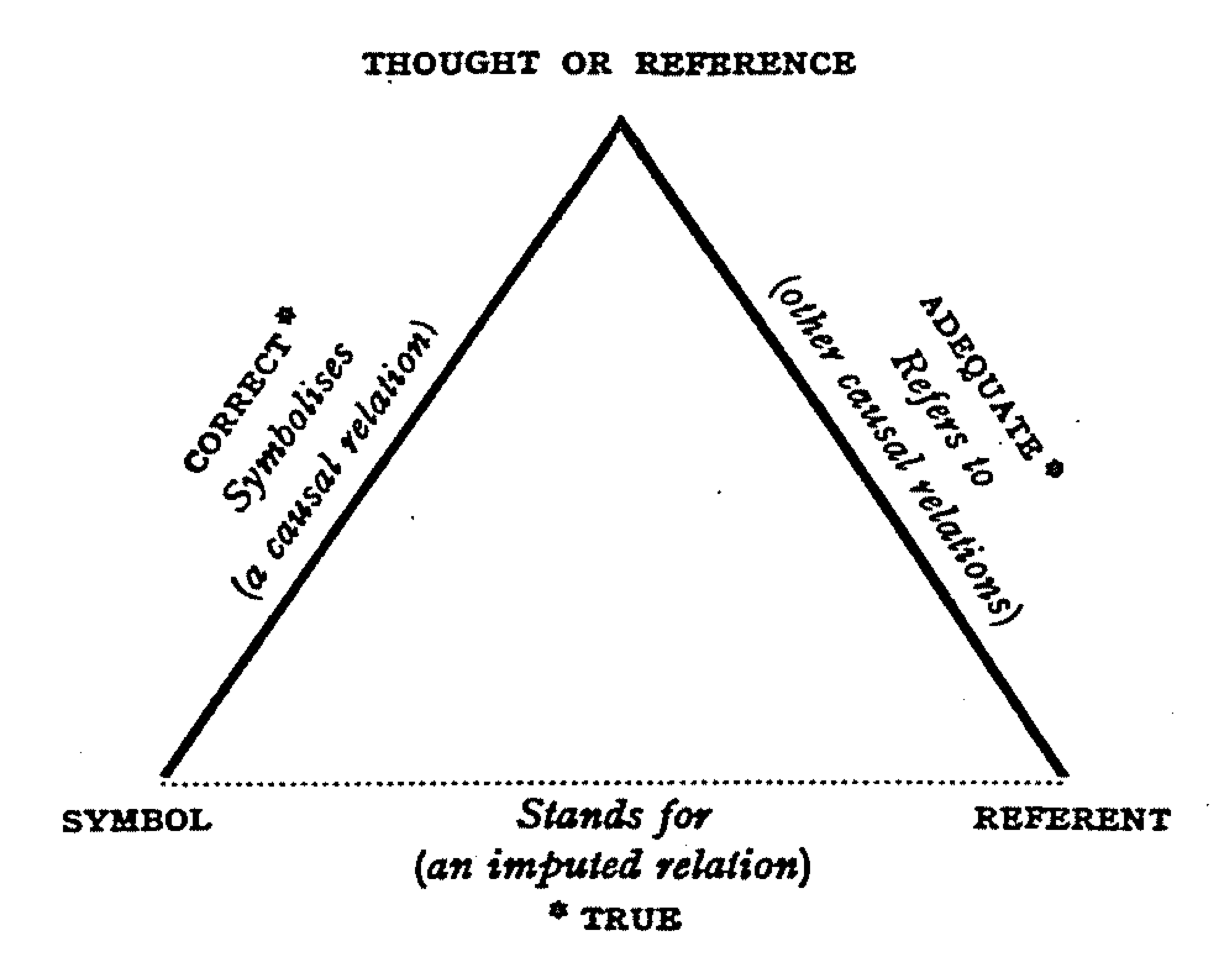
islandis recently shared a paper on the monome phenomenon that he wrote for a semiotics class he is taking at Duke:
It has garnered a little (but not enough, in my opinion) conversation on the monome forum.
The monome device is an odd kind of sign system. Even a honeycomb pattern would give more of a musical sense of scale-pattern. A grid is so deliberately open ended. In classical semiotic terms, is it the symbol, the reference or the referent? When you decouple that grid, which is which? Are the buttons the references, the LEDs the symbols and the application output the symbol? How do they all overlap?
Hmm. Nothing quite like monome meditative joy. Thanks for following. Peace.
Friday, May 8, 2009
progress plot

Life has a way of getting in the way of living sometimes. Having time for my avocation is certainly something I want to prioritize - if for nothing else than my own sanity. There is, however, something to the word "avocation" that indicates that it must hold only a relative place of importance in one's scheme of things.
Good things have been happening vocationally recently. Lots of good creativity. That is, of course, the point of a sabbatical. And I am happy about it. And big things have been happening in my life as well. Lots of family joys and sorrows all at once.
That being said, avocational productivity is down these days while learning, thankfully, plods on. The Andromeda is massive. I will try to just get a sine wave out of the thing and, as warned, I have to sort through menus and manuals to figure out why I hear overtones! The filter is still whining - why? Haven't I turned down all the resonance? Okay - Where is the modulation routing to the resonance? Etc, etc. Oh, well. I still love it!
The Andromeda and the Prophet sound great together. I will have to record a sample and share soon. Something about analog with analog. You just can't beat it. I even love it when they are slightly out of tune with one another. I am also loving the Prophet ever more as I have an analog beast to compare it to. The P600 is lovely in her simplicity.
I think I will commit to a week of production before the summer is out. I want to do the whole "make an album in a day" thing, but, instead, turn it into a week. I'm going to go for about six songs. Pop music is what I am hearing in my head these days. Really cheesy, dance-y, disco-y kind of stuff. So, a pop song a day? It should be fun. I have a tentative name for the album: "cliché." That should free me from lofty expectations. Until then, thanks for the encouragement.
Monday, April 27, 2009
manifesting the architectonic

I while ago Stretta put up this great talk given by a music professor, Karl Paulnack at the Boston Conservatory. I highly recommend it. In it, among other wonderful things, he says this:
. . . the Greeks said that music and astronomy were two sides of the same coin. Astronomy was seen as the study of relationships between observable, permanent, external objects, and music was seen as the study of relationships between invisible, internal, hidden objects. Music has a way of finding the big, invisible moving pieces inside our hearts and souls and helping us figure out the position of things inside us.
Now I love this statement and find it so true. But I worry about the the way that a distinction between "inner" and "outer," could imply a kind of interiority or subjectivism that would have been foreign to the ancient mind. Paulnack never mentions it, and I am sure that he would not intend it, but such an interior "self," is much more a product of post-Cartesian Romanticism with a dash of Psychoanalysis than it is of the Greeks who understood the relationship of music to astronomy. I love the way Paulnack captures so well our experience of music. I also want to emphasize the way that music overcomes barriers between people - especially those false ones created by ideologies of interiority and subjectivity.
So, yes to "pieces inside our hearts," when "heart" is construed as synecdoche for the psychosomatic unity of the human body and soul. But not so much if "heart" here is misread as something "touchy feely" - you know what I mean.
The key distinction is not so much between the "inner" and the "outer," when such a distinction is conceived in terms of a romantic interior life of a "true self." In order to avoid that connotation I would rather talk in terms of the more simple distinction between "visible" and "invisible," or between the "physical" and the "psychic," "noetic," or notional. But "notional," not in the sense of "that's just a notion," but in the thicker sense of something just as real, if not more real than the physical, that is the name for what is not physical about creation. So I guess I mean here the Christian theological distinction between the heavens and earth, taken in their theologically richest sense.
Astronomy is not an "external" to a music that is "internal." Astronomy just is the music of the visible heavens - the music of the spheres. Music is not so much the astronomy of things interior - and therefore merely subjective and private - within our souls. Music is rather the universal, "astronomically big," astronomy of the hidden, invisible and greater part of created reality: the invisible (but more real) heavens. Music puts us directly in touch with the architectonic structures of the cosmos that the visible heavens merely physically manifest.
So often, after Romanticism, creativity is construed in very private terms. This puts a lot of pressure on the artist to "prove" him or herself. The ancients of course, knew that this great flow of stuff didn't come from some place interior within ourselves. (Check out this other post on Stretta's blog where he embeds a video of the author Elizabeth Gilbert giving her own account of the ancient sense of genius and the creative "daemon.") Creativity, rather, is the manifestation of how we as human beings can sometimes get swept up into these architectonic and cosmic realities - realities far bigger than us - and come out on the other side and say: look, I made this. Or, rather: look what came into being through the way that I participated in things greater than I.
I think that is why I love the monome device as a tool for creating music: the decoupled grid seems to me to be this electronically beautiful mimesis of how in music in general greater patterns manifest within small constraints. The LED patterns keep going, even after you loose touch. Good music always has these moments wherein you get this little glimpse of the vastness that is being made manifest - all of which cannot be immediately made present at once - the grid would burst, our hearts too.
Making the distinction primarily between the visible and the invisible, rather than the physical and the so-called interior also takes the pressure off of the individual artist to produce (good stuff), and allows for the mystical to come back into the experience of creativity - and especially (at least speaking for myself) of creating music.
Near the end of his article he says the following to his new music students:
You’re not here to become an entertainer, and you don’t have to sell yourself. The truth is you don’t have anything to sell; being a musician isn’t about dispensing a product, like selling used Chevies. I’m not an entertainer; I’m a lot closer to a paramedic, a firefighter, a rescue worker. You’re here to become a sort of therapist for the human soul, a spiritual version of a chiropractor, physical therapist, someone who works with our insides to see if they get things to line up, to see if we can come into harmony with ourselves and be healthy and happy and well.
Man, I find that so amazingly well written, and inspiring. When we think of the role of creating music in terms of a distinction between the visible and the invisible parts of creation, rather than between an outwardly (and shared) physical world and a private interior life, I find it to be even more profound. In music, we cross the barriers between ourselves. The real ones, like my body isn't your body. That doesn't change but if anyone has ever been a part of a successful music ensemble you have known of moments when your body and other people's bodies were "one" in every sense that matters. But, thankfully, music also tears down the false barriers that we create to protect or to congratulate ourselves.
You know, like "I am so creative and unique" together with its ever implicit "so maybe you aren't." Or the self-deprecating inverse: "O, man, he is so creative and unique" with the ever following, "I only wish I could do that - be that cool - etc."
Or how about that whole romantic "nobody can really understand me" thing. No, no one will ever really understand you. And so what? Why should they? No one can even really understand themselves. But when we share music, we all share, together, in the great big Reality that none of us ever understands - but that we grasp at - and never alone, but with one another, with the music we give as gifts to one another.
So here is a big "thank you" to all of you out there that I have met in the "blogosphere" that have helped me see glimpses of the great-big-Real because of the music you have so freely and generously shared. I am so grateful to have my own "appropriate-to-who-I-am" sized role as well.
Thanks for following and thanks for the support. Peace
Subscribe to:
Posts (Atom)